Blog

20 Years In IT #4: About Werewolves, Doppelgangers, and Vultures..

Article 5 - Werewolves, Doppelgangers, and Vultures

There have always been those who want to abuse the job market. That is, there have always been some scrapers; companies often used the market to calibrate pay rates for job tiers. However, now the job market, especially on large platforms, is a minefield. From the site, you're directed to an aggregator, which forwards you to a scraper that has removed the position from an advertising agency, which then forwards you to a corporate website... where the position has long been closed. A simple case, and generally safe. There are more interesting predators. Here are:

Vultures: When I posted the "OpenToWork" sign this time, I received 11 (!) different contacts within half an hour. They're about level, have a great profile, and there's a great position available, lots of money right next door. You just need to get your resume updated, with that service, for just $100. But if you give us another $200, we'll take care of the whole process. You can also buy a course on interview skills and a certificate from us proving how brilliant and smart you are.

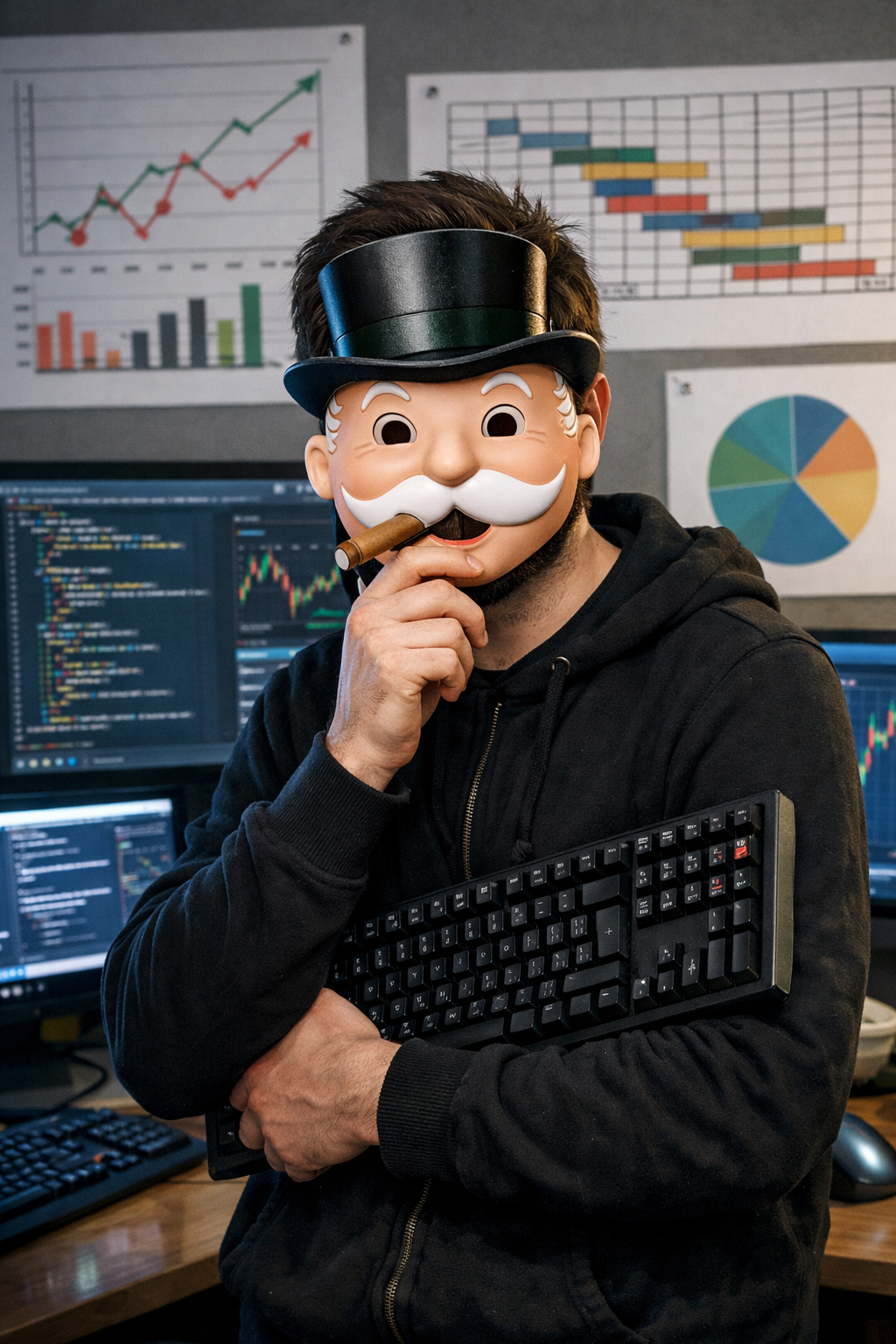
Doppelgangers: I receive invitations quite regularly from a certain website, or rather a group of websites, whose names differ from PMI, IIBA, ISTQB, and other recognized ones, usually by a single word. But during the sales season, you can get a quasi-PMP for just $80, and for $149.99, you can get a quasi-MBA. The rest are costing $20-50 on average. The main thing is to give them money. Although these certificates are not listed anywhere, not accredited, and will bring nothing but laughter from the interviewers.

Werewolves: Programmers talk about this more often – right before the screening, there's a test task to fix the code. Code is provided, just pull it to the local machine, deploy .. And there's some very cleverly hidden malware. Or, during the screening, the interviewer will find out that you want to join a crypto project because you love and use coins. Next, they'll ask you to verify your account/open a link/close your eyes and open your pockets. In both cases, all your coins are belongs to us.

There are also ghosts – 60% of applications are usually ignored. These are good ghosts. Evil ones are when the ignoring begins after 5-7 rounds of interviews. Anglerfish with fishing websites and their own rnicrosoft (that was RN, not M). A couple more times, we started talking – "you're right for us, no interviews required". Your 200k per year offer is on-da-way, just send a scan of your passport+(everything imaginable) to process the offer, fill up the empty field, yep.

Be aware and warned in advance. Sooner or later, you'll reach real recruiters, the screening will be successful, and suddenly it will become clear that your favorite toys can be given to the Cat. In the next part – About Schrödinger's Cat's Favorite Toys.


20 Years In IT #3: Santa would not come.

Article 4 - Santa would not come

The IT market has evolved in such a way for decades (since end of Dot-Com crisis) that when a specialist put up a "Looking for a Job" sign, a huge sack of offers virtually appeared before them:

  • Fintech, e-commerce, maybe a startup?
  • With relocation to Singapore, Germany, maybe the US?
  • Do you want an office with daily pizza or remote work with a lended MacBook?
  • We'll give you a VR set and a Rent-a-Car budget.

It's become habitual norm, stable and constant, like Santa Claus on New Year's Eve. And when, instead of a beautiful red sack with yet another gift, you get something-near-to-nothing, not even a piece of coal in your pocket, it feels strange. By the way, the sight of Krampus waving in the distance in an "I AM AI" T-shirt is a little annoying.

Grabbing your familiar tools, you see that they don't work either. EasyApply? I think companies only need it to collect statistics on expected salaries, invite people to subscribe to their news, and tune their AI-ATS. Recruiting agencies? Good luck, just good luck. They have even more problems than the IT contributors themselves. Career accelerators? - in general: update Your CV to current Rules of Game and roughly the same advice: 100 CV applies per week, preferably through corporate websites. References? - Yes, it still works, but do not bet too much here.

For those who want to work exclusively remotely and in English (like at old good times) - guys, you realize you're competing with practically all of India, right? Incidentally, this (all the above) is also causing salaries in the industry to skyrocket, but downwards. I've already started collecting these job posts. Just to keep my expectations down to earth. Want some examples?

  • Senior Manager/Head of PMO for 35k euros,
  • One who is an Agile+Delivery+Project+Product+Process Manager - 25-30k
  • Full-stack Test Automation Specialist - US 20k-25k…

No, these aren't positions in South Asia, these are positions in Europe. Gross on B2B, annually for sure. For contracter - middle-level engineer for price of a waiter.

Well, perhaps It's worth adding - Santa's list of sins has also changed: over 40? Changing jobs? Russian? Not a media personality? Don't want to work in 996? - Crossed off the list of good children.

It is sad that we're not seeing Santa but a much more sad thing about the labor market is that evil forces have taken over. Next time we'll talk about Werewolves, Doppelgangers and Vultures

20 Years in IT #2: Chimeras, Many-Handed Gods, and 27-in-1 Solutions

Article 3 - Chimeras and Many-Handed Gods

Let's proceed from the point where we stopped. Opposing and sometimes impossible requirements in job postings are a good filter. You look at them and decide not to apply. But sometimes you come across job postings that remind me of a mythological chimera - the one with several animal heads, body of a lion, wings and a scorpion tail.

I'd like to take a step back.

  • 20 years ago: average job posting: (language) coder needed. Requirements: (language) or similar languages coding skills.
  • 15 years ago: Frontend OR Backend OR DBA with exact technical domain
  • 10 years ago: FullStack (as well as master of three-tier arch) in exact domain
  • 5 years ago: FullStack++ Premium Edition with 3 different domains

The current positions often look like this: we have 30 different requirements from 10 different areas. You can be T-shaped and versatile as the colleague in the post's picture, but out of 30 requirements, you only have 20, and from 10 areas you can be experienced in 7. The CV goes in the trashbin, You get an email with "After careful consideration..."

Having other stacks doesn't help, as they're not needed on the project. This, by the way, often triggers impostor syndrome.

And if we look a little into the future, to the forecastable future where everything is expanded, deepened, and accelerated by AI, it begins to seem like the ideal team will consist of three specialists:

  • Product Visionary – a product, delivery and project manager, business/system analyst, market researcher, domain expert and accountant.
  • Product Builder – ALL-stacks developer (web, desktop, mobile), also acts as an architect, DBA, designer and AI agents orchestrator.
  • Product Supporter – DevTestSysSecPerfOps, who tests, write test frameworks and builds pipelines, Jira workflows, resolves bugs from support, and defines/maintains NFR and FURPS

Perhaps with some drift between the roles, where design goes to the Visionary, and training of ML models is given to the Builder, while the Supporter is engaged into A/B testing.

I don't see this option as terrible. Rather, it's a dilemma – where do I fit into this scheme, since both the first and third options are quite relevant to my expertise. Unfortunately, there's no room for fairy tales in this optimized future. Santa Claus won't be coming anymore. Why? I'll explain in the next part.

20 Years in IT #1 - Market and Rules of the Game

Article 2 - Market and Rules

It so happens that I'm looking for a job for the second time in the last 12 months. The days when an experienced IT professional would decline another recruiter about once a week ended roughly with COVID. Everyone who wanted to digitalize their business did so, updated their websites, and built mobile apps.

Along with the market reduction came war and His Majesty AI. The war destroyed the established outsourcing market in Eastern Europe, and Southeast Asia and Latin America entered the fray to divide up the inheritance. Simultaneously, widespread remote work began to be forced back into offices. The rules of the labor market began to change rapidly, unevenly, and often without any system.

Application conversion rate: Currently, for every 100 CV submitted, you'll receive 25-30 rejections, 5-7 conversations with a recruiter, which will lead to 2-3 interviews. This conversion rate is similar across the entire IT market. There may be an exception for principal AI/ML developers. But overall, 65-75% of applications are simply ignored. The days when you'd get 2-3 offers for every 10 applications are also a thing of the past.

At the same time almost every company is trying to re-invent the wheel and hiring process, now we're playing cards, chess, and D&D at the same table.

Opposite requirements:

  • We don't review CV with a >95% match - they've been tuned for the position. We don't review CVs with a match rate of <95% - there are more relevant candidates.
  • CV should be one-pager, CV should uncover each of your workplace and each achievement till school-years medals of competition.
  • We don't read cover letters, we don't accept cover letters, we don't accept applications without cover letters, AI-generated cover letters cause immediate rejection.
  • We have two buttons: upload your resume and send it. We have 21 pages of questions.
  • We follow GDPR, so we won't ask anything. We don't follow GDPR, so what's your pronunciation/gender/sexuality/preferences/something else that even your parents don't know.

Impossible requirements:

  • We work remotely, but you need to come to our office in South Africa in 3 hours when we call. We work remotely, but onboarding consists of a week in the UK, a week in the US and a week in China.
  • 5 years with technology that only appeared 3 years ago.
  • Entry-level manager with 5 years of experience and a PMP. Just-graded with 3 years of..
  • 3 years in BE, 3 years in FE, 3 years in QA, 3 years in Devops … and be under 30.

The next part will be about chimeras, many-handed gods and 27-in-1 solutions.

20 Years in IT #0 - Impostor Syndrome

Article 1 - Impostor Syndrome

This month, I'm celebrating two anniversaries: 20 years in IT and 30 years since I got my first PC. I'll be writing a series of posts about the changes we've already experienced, are seeing right now, and the ones we're heading toward. These won't be texts generated by GPTs just to fit the space, sales pitches for consulting, or "do well, don't do poorly"-level instructions; rather, they'll be purely my personal observations, reflections, and experience.

There are very few job openings in the market that require 20 years of experience, but at the same time, technology requirements, the rules of the game, and many approaches have changed. What was fashionable and well-researched, say, 10 years ago is now unfashionable and outdated. This perpetual change causes the dilemma - Can someone be overqualified and underqualified at same time? My personal answer is Yes, - there is always a space in knowledge where You can extend, enrich, actualize. Constant retraining provokes reflection: am I really a specialist? Am I still capable of being a top performer in Quality Assurance, Business Analysis, Management and Delivery?

The tasks I perform say - yes, my colleagues says - yes, my CV and dozens of certificates says - yes, and the hiring market says No with rejection emails with GPT-generated texts. Does this undermine my confidence? More likely not, but it's the reality I have to deal with.

The next part will cover the current state of the hiring market.